Introduction: When Clutter Becomes a Crisis
In homes across North and Central New Jersey, from the quiet suburbs of Warren and Morris Counties to the densely populated neighborhoods of Hudson, Somerset, and Middlesex, a silent struggle often hides behind closed doors. It’s called hoarding disorder — a complex behavioral and psychological condition that goes far beyond simple clutter.
At JunkDoctorsNJ.com, our team has seen firsthand how hoarding can affect not only homes but also families, health, and safety. Understanding why it happens and how it evolves is the first step toward recovery and restoration.
What Is Hoarding Disorder?
Hoarding disorder is defined as a persistent difficulty discarding or parting with possessions, regardless of their actual value. What begins as holding onto sentimental items can gradually escalate into an overwhelming accumulation that interferes with living spaces and daily life.
According to the McLean Hospital, between 2% and 6% of adults in the United States are affected by hoarding disorder. The condition can range from mild clutter to severe cases where rooms become completely unusable due to excessive accumulation of items, debris, or waste.
Unlike collecting, which is organized and intentional, hoarding involves disorganization, emotional distress, and difficulty letting go — often accompanied by feelings of shame or anxiety when others attempt to help.
How Hoarding Begins: Emotional, Psychological, and Medical Roots
Hoarding rarely happens overnight. It typically develops gradually, often rooted in emotional experiences, mental health conditions, or medical issues. Understanding these triggers can help families approach the situation with empathy instead of judgment.
1. Loss of a Loved One
One of the most common triggers for hoarding behavior is grief. When someone loses a spouse, parent, child, or close friend, they may cling to objects as a way to preserve memories. These items can become emotional anchors, leading to the accumulation of belongings that represent comfort or control in a time of loss.
2. Trauma or Emotional Stress
Traumatic life events — such as divorce, eviction, or financial hardship — can create anxiety and insecurity that manifest through hoarding. Individuals may develop an emotional attachment to items because they represent safety, stability, or a sense of identity.
3. Medical and Psychological Conditions
Research shows that hoarding is often linked to other conditions, including:
- Depression – leading to loss of motivation and avoidance behaviors.
- Obsessive-Compulsive Disorder (OCD) – creating intrusive thoughts about “needing” to keep things.
- ADHD – difficulty organizing or prioritizing items.
- Dementia or Cognitive Decline – impairing decision-making about what to discard.
4. Personality and Behavioral Patterns
Some individuals have perfectionist tendencies or fear making the wrong decision about what to throw away. Over time, this leads to inaction — and clutter grows quietly until it becomes unmanageable.
The Evolution of Hoarding: How It Gets Worse Over Time
Hoarding disorder typically starts early — many adults who struggle with hoarding report their symptoms began before age 20. But it often becomes most severe in middle or older age, when mobility declines and social isolation increases.
The progression often follows this pattern:
- Clutter Accumulation – Items start piling up in corners, closets, or spare rooms.
- Loss of Functionality – Rooms lose their intended use; kitchens, bathrooms, or hallways become blocked.
- Health & Safety Risks – Mold, pests, fire hazards, and structural issues develop as clutter spreads.
- Social Withdrawal – Shame, embarrassment, or fear of eviction cause individuals to isolate themselves.
At this stage, cleaning or organizing without professional help can feel impossible. Families often become overwhelmed trying to intervene — and that’s where trained hoarding clean-out professionals step in.
Why Hoarding Is Common in North & Central New Jersey
In our experience serving hundreds of homes throughout the region, hoarding cases appear most frequently in:
- Warren County – Rural properties with larger storage spaces or barns often go unnoticed for years.
- Morris County – Older single-family homes passed down through generations, filled with sentimental items.
- Hudson County – Dense urban housing where apartments can become overfilled quickly due to limited storage.
- Somerset County – Suburban neighborhoods where long-time homeowners gradually accumulate decades of belongings.
- Middlesex County – High population density combined with aging communities leads to more hoarding-related clean-outs.
While hoarding can happen anywhere, North and Central New Jersey’s mix of older homes, multigenerational families, and limited disposal access make it a recurring issue. Many local townships also have strict rules about what can be discarded curbside, which delays or discourages proper cleanup.
How Hoarding Impacts Health, Safety, and Family Relationships
Beyond clutter, hoarding has serious consequences:
- Health Hazards: Dust, mold, and rodents create respiratory and sanitation issues.
- Fire Risk: Blocked exits, flammable piles, and overloaded outlets make fires more likely and dangerous.
- Structural Damage: Excessive weight and moisture can weaken floors and walls.
- Emotional Strain: Families experience tension, guilt, and burnout when trying to help.
In severe cases, townships may condemn a property or issue fines if conditions violate health codes. That’s why early, compassionate intervention is key.
The Role of Professional Junk Removal in Hoarding Recovery
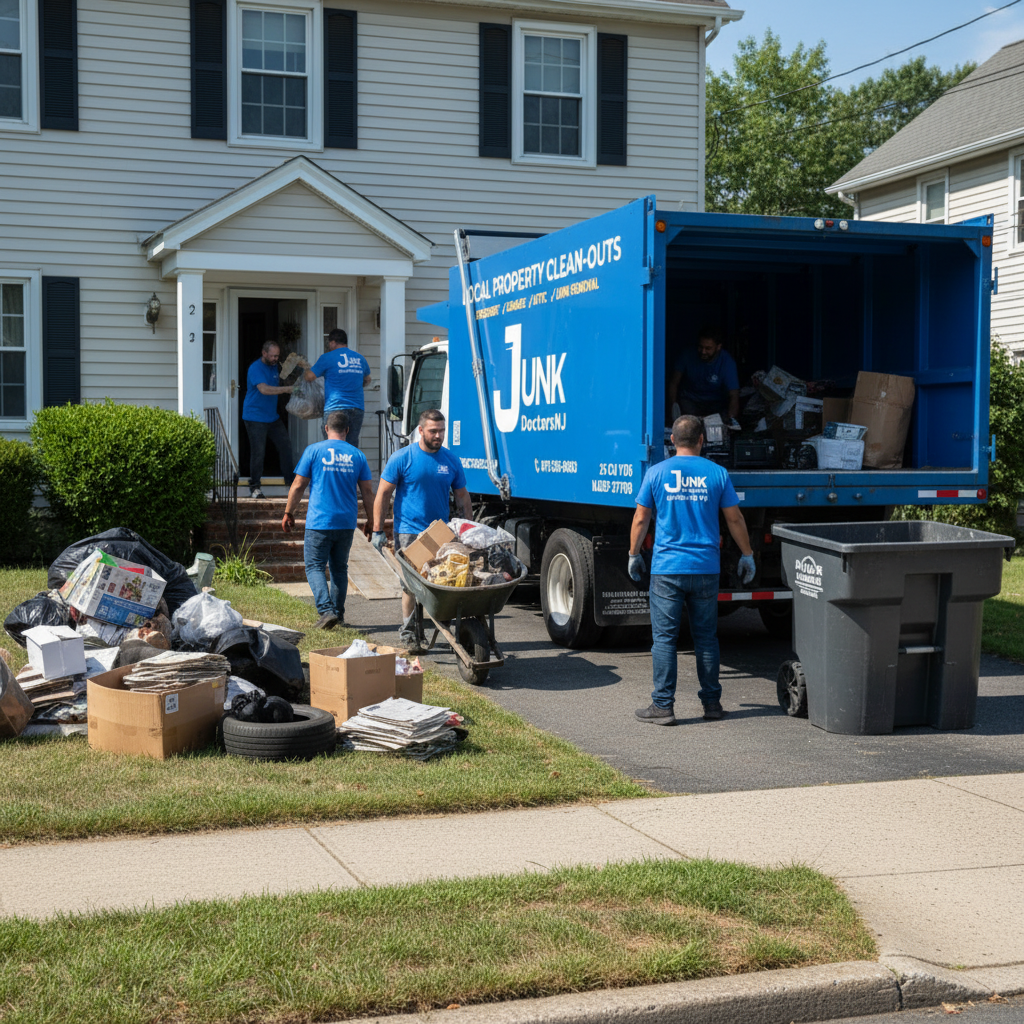
Cleaning out a hoarded home isn’t like a standard junk removal job — it requires care, coordination, and patience. At JunkDoctorsNJ.com, our team specializes in hoarding clean-outs across North and Central NJ, including Warren, Morris, Hudson, Somerset, and Middlesex Counties.
Here’s how our approach helps families restore safety and dignity:
- Free on-site estimates and walk-throughs to evaluate the situation.
- Compassionate crew members who understand the emotional aspect of hoarding.
- Safe sorting, removal, and disposal following NJ DEP regulations.
- Volume-based transparent pricing with no hidden fees.
- Coordinated donation and recycling for usable items.
Our goal isn’t just to empty a house — it’s to help families reclaim peace of mind and start fresh.
How Families Can Help a Loved One Who Hoards
Dealing with hoarding requires patience, empathy, and a plan. Here’s how to begin:
- Start conversations without judgment — focus on safety, not blame.
- Encourage therapy or counseling from a mental health professional familiar with hoarding disorder.
- Involve trusted family or friends to build emotional support.
- Schedule professional clean-out help only when your loved one is emotionally ready.
Remember, progress happens step by step — sometimes room by room.
When to Call for Professional Help
If clutter is threatening your health, safety, or property value, it’s time to call for assistance. A professional junk removal company can help when:
- There’s mold, pests, or foul odors.
- Rooms or exits are blocked by clutter.
- Essential spaces like kitchens or bathrooms are unusable.
- You feel emotionally or physically overwhelmed.
Junk Doctors NJ works discreetly and respectfully to restore homes to livable condition — with same-day service available in many cases.
Conclusion: Hope After Hoarding
Hoarding is not a reflection of laziness or neglect — it’s often the result of pain, loss, and mental health struggles that deserve compassion and understanding. With the right combination of emotional support and professional help, recovery is possible.
If you or someone you care about in North or Central New Jersey needs assistance, our local team at JunkDoctorsNJ.com is here to help. We proudly serve Warren, Morris, Hudson, Somerset, and Middlesex Counties and surrounding areas.
📞 Call 973-336-8083 or visit JunkDoctors.com today for a free, confidential estimate. Compassionate cleanup starts with a single call.