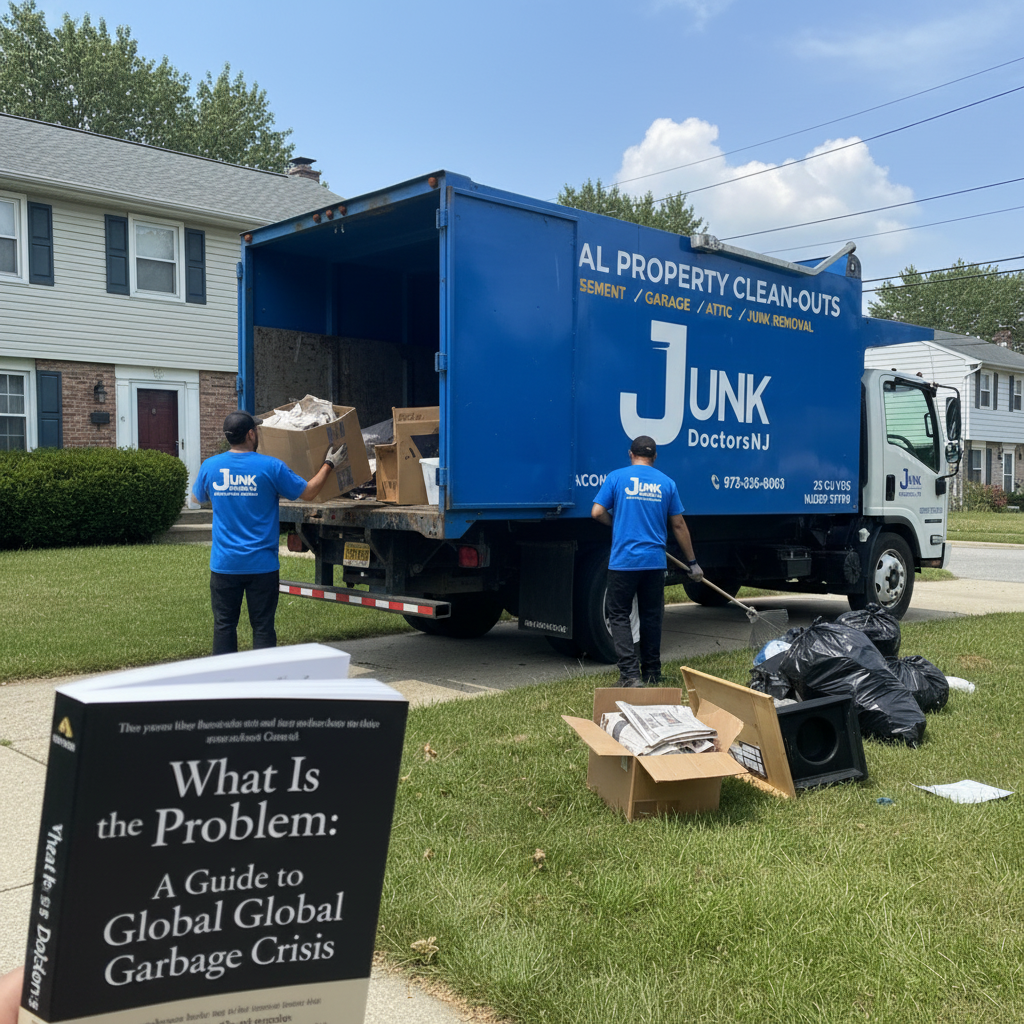
The Global Garbage Crisis: A Growing Concern (and the Real Solutions That Work)
The world is drowning in garbage—and it’s not just an eyesore. Overflowing landfills, plastic-polluted waterways, and fast-growing streams like e-waste are turning “trash” into one of the biggest environmental, public health, and economic challenges of our time.1
This guide breaks the crisis down in plain language: what’s actually happening, why it’s happening, where our waste goes, and what governments, businesses, and households can do that truly moves the needle.
The Numbers Behind the Crisis
If you only hear one thing, let it be this: the garbage crisis is not a small “cleanup problem.” It’s a scale problem—and a systems problem.1
- Global municipal solid waste (MSW) is rising fast: it’s projected to grow from about 2.1 billion tonnes (2023) to 3.8 billion tonnes by 2050 if major changes aren’t made.1
- Plastic waste is far from circular: global plastic waste reached 353 million tonnes in 2019, and only about 9% was ultimately recycled (after losses).5
- Plastic leakage is huge: estimates summarized by UNEP indicate 19–23 million tonnes of plastic waste leak into aquatic ecosystems every year (lakes, rivers, and seas).4
- E-waste is exploding: the world generated a record 62 billion kg (62 million tonnes) of e-waste in 2022, and only 22.3% was formally collected and recycled in an environmentally sound way.6
- Food waste is staggering: in 2022, the world generated about 1.05 billion tonnes of food waste—nearly one-fifth of food available to consumers.7
- The U.S. example shows the challenge: EPA’s latest comprehensive MSW data set (2018) reports 292.4 million tons of trash generated, with a combined recycling/composting rate of 32.1%.2
These numbers aren’t meant to scare you—they’re meant to clarify what we’re up against: the status quo can’t keep up.
The Real Problem Behind the Piles
Most people assume the garbage crisis is simply “too much trash.” That’s only half true.
The deeper issue is how waste is managed (or not managed)—collection gaps, contamination, illegal dumping, weak recycling markets, underfunded infrastructure, and products designed to be thrown away.
UNEP highlights that poor waste disposal practices carry major “hidden costs” tied to pollution, health, and climate impacts—and these costs can rise dramatically without urgent reform.1
Where Our Trash Goes (and Why It Matters)
When you throw something “away,” it doesn’t disappear—it goes somewhere. Most waste ends up in one (or more) of these buckets:
- Landfills (the default destination in many places)
- Incineration / waste-to-energy (reduces volume, but raises air pollution and climate questions depending on controls and inputs)
- Recycling & composting (high potential, but sensitive to contamination and market demand)
- Leakage (litter, illegal dumping, mismanaged waste that escapes into communities and ecosystems)
The crisis accelerates when waste is mismanaged—not captured reliably, not sorted correctly, or not treated responsibly. On plastics specifically, OECD data shows that a large share still ends up landfilled, incinerated, or mismanaged rather than recycled.5
Landfills: Overflowing Space, Methane, and Long-Term Risk
Landfills are often treated like a permanent solution. In reality, they’re a long-term liability.
1) Landfills are a major methane source
As organic waste (especially food and yard waste) decomposes in landfills, it generates landfill gas—roughly half methane and half carbon dioxide.3
EPA reports that U.S. landfills released an estimated 119.8 million metric tons CO₂e of methane in 2022, representing a significant share of total U.S. anthropogenic methane emissions.3
2) “Burying it” doesn’t remove risk
Even modern sanitary landfills require ongoing engineering: liners, leachate management, gas capture, monitoring, and eventual closure care. If any part of that system fails—or if waste is dumped in uncontrolled sites—the environmental impacts can last decades.
3) The space problem is real (but it’s not the only problem)
While some regions do face limited landfill capacity, the bigger challenge is that landfills are often the cheapest option in the short term—so systems drift toward disposal unless policy and infrastructure make reduction and diversion easier and more cost-effective.
Plastic Proliferation: From Single-Use to Microplastics
Plastic is the signature material of the garbage crisis because it’s lightweight, durable, often used once, and hard to recover at scale.
How much plastic is getting into the water?
UNEP notes that 19–23 million tonnes of plastic waste leak into aquatic ecosystems each year.4
You’ll also see older (but still widely cited) estimates that more than 8 million tonnes of plastic ends up in oceans annually—often framed as “a garbage truck every minute.”8 More recent syntheses emphasize uncertainty and suggest lower ocean-input estimates in some analyses, depending on methods and definitions.9
Microplastics: not just an ocean problem
Plastic breaks down into smaller and smaller fragments, including microplastics. Research has increasingly detected plastic particles in the human body (including blood and multiple organ systems), though the full health implications are still being studied and are not yet fully understood.1011
The takeaway: plastic pollution is not “far away.” It’s a local, everyday exposure issue—and a global systems issue.
The Recycling Myth vs. Recycling Reality
Recycling matters—but it’s not magic. The biggest myth is that recycling alone can offset a throwaway economy.
Why recycling struggles (especially for plastics)
- Contamination: “wish-cycling” (throwing non-recyclables in the bin) can spoil loads.
- Economics: recycling requires stable end-markets; when commodity prices fall, programs struggle.
- Complex materials: multi-layer packaging, mixed plastics, and tiny items are hard to sort and process.
- Design problems: products optimized for marketing and convenience are often terrible for recycling.
Even in the U.S., the EPA’s latest full MSW dataset (2018) shows a combined recycling and composting rate of 32.1%—a reminder that “recycling culture” doesn’t automatically translate into recycling outcomes.2
Recycling works best when you design for it
Materials like aluminum and some paper products often recycle more effectively because systems exist to collect them cleanly, and markets can support reprocessing. But recycling works best as part of a broader strategy—not as the only strategy.
Why Do We Have So Much Waste?
The garbage crisis is driven by incentives that reward short-term convenience:
- Consumer culture: buying is easy; repair is hard.
- Planned obsolescence: many products aren’t built for durability or repair.
- Packaging overload: convenience and branding often trump reusability.
- Fast replacement cycles: phones, furniture, décor, kids’ items, seasonal goods.
When a system is designed around “new” instead of “lasting,” waste becomes inevitable.
The “Hidden” Waste Streams: Food, Construction & E-Waste
Some of the biggest waste streams aren’t what people picture when they hear “trash.”
Food waste (a climate issue disguised as a kitchen issue)
UNEP reports that the world generated 1.05 billion tonnes of food waste in 2022, with the majority occurring at the household level.7
Food waste matters because it wastes the land, water, energy, and labor used to produce food—and once landfilled, it can become a methane problem.
Construction & demolition debris (the elephant in the room)
In the U.S., EPA estimates 600 million tons of construction and demolition debris were generated in 2018—more than twice the amount of municipal solid waste.12
This stream includes concrete, wood, drywall, asphalt shingles, metals, and more. The best opportunity here is planning, deconstruction, salvage, and dedicated recycling channels.
E-waste (the fastest-growing “toxic treasure”)
E-waste contains valuable materials—alongside hazardous ones. The world generated 62 billion kg of e-waste in 2022, and less than a quarter was formally collected and recycled properly.6
When electronics are trashed instead of recovered, we lose resources and increase contamination risk.
Solutions: What Can Be Done?
The most effective solutions follow a simple rule: prevent waste before you manage it.
1) The waste hierarchy (in the right order)
- Reduce (buy less, design less waste, avoid single-use)
- Reuse (refill, repair, resell, share)
- Recycle/Compost (capture clean materials and organics)
- Recover energy (only where appropriate, with strong controls)
- Dispose (the last resort)
2) Infrastructure that matches reality
Recycling and composting can’t succeed on good intentions alone. Communities need convenient collection, modern sorting, and local end-markets (or reliable regional ones).
3) Policies that change incentives
- Extended Producer Responsibility (EPR): makes producers help fund end-of-life management
- Pay-as-you-throw: encourages less trash, more diversion
- Deposit return systems: boosts recovery of beverage containers
- Organics diversion: keeps food and yard waste out of landfills
4) Better methane control
Landfill methane capture, improved monitoring, and diversion of organics are practical climate actions—because methane is powerful, and landfill emissions are significant.3
5) A real shift toward a circular economy
UNEP’s Global Waste Management Outlook emphasizes that waste avoidance and a circular economy approach can dramatically change the cost and impact trajectory of global waste trends.1
What Can You Do? (A Realistic Checklist)
You don’t need to be perfect to be effective. Pick a few actions you can sustain.
- Stop “wish-cycling”: recycle only what your local program accepts.
- Cut the easiest single-use items: bottles, bags, utensils, takeout extras.
- Compost if available: even partial organics diversion helps.
- Buy for durability: choose items you can repair or resell.
- Use take-back programs: for electronics, batteries, and certain packaging.
- Donate usable items: keep furniture, clothing, and housewares in circulation.
- Right-size cleanouts: when moving or renovating, plan sorting and donation early.
New Jersey Spotlight: Practical Disposal & Eco-Friendly Cleanouts
Local disposal choices matter because they determine whether items get reused, recycled, or landfilled.
Where junk removal fits the big picture
Most people call a junk removal company when they’re overwhelmed: a move, a renovation, an estate cleanout, or a basement that finally needs attention. Done right, that moment can become a high-impact diversion opportunity—because large volumes of items can be sorted for donation and recycling instead of dumped.
Example: JunkDoctors NJ (eco-friendly disposal in practice)
JunkDoctors NJ states that they recycle and donate items whenever possible, which supports the “reuse first” logic that the waste hierarchy recommends.13
On service pages, they also describe recycling common materials (like cardboard and appliances) and donating usable goods—helpful guardrails for reducing landfill load during major cleanouts.14
If you’re planning a cleanout, a simple way to improve outcomes is to separate items into:
- Donate (usable furniture, housewares, clothes)
- Recycle (cardboard, metals, certain electronics)
- Dispose (broken, contaminated, hazardous—handled properly)
That sorting step—before the truck is loaded—is where most of the “eco-friendly” impact is won or lost.
Conclusion: The Future Isn’t “Zero Trash”—It’s Smarter Materials and Better Systems
The global garbage crisis isn’t one problem—it’s many problems stacked together: rising consumption, weak infrastructure, difficult-to-recycle materials, food waste, e-waste, and policies that still make disposal too easy.
But the solutions are not mysterious. They’re practical: prevent waste, build systems that capture materials cleanly, redesign products for durability and recovery, and control landfill methane while we transition.13
Every household action helps—but the biggest wins come when cities and businesses make the “low-waste choice” the default.
If you’re in New Jersey and need a cleanout: choose a provider that prioritizes recycling and donating usable items whenever possible—so your cleanout reduces clutter without feeding the landfill cycle.13