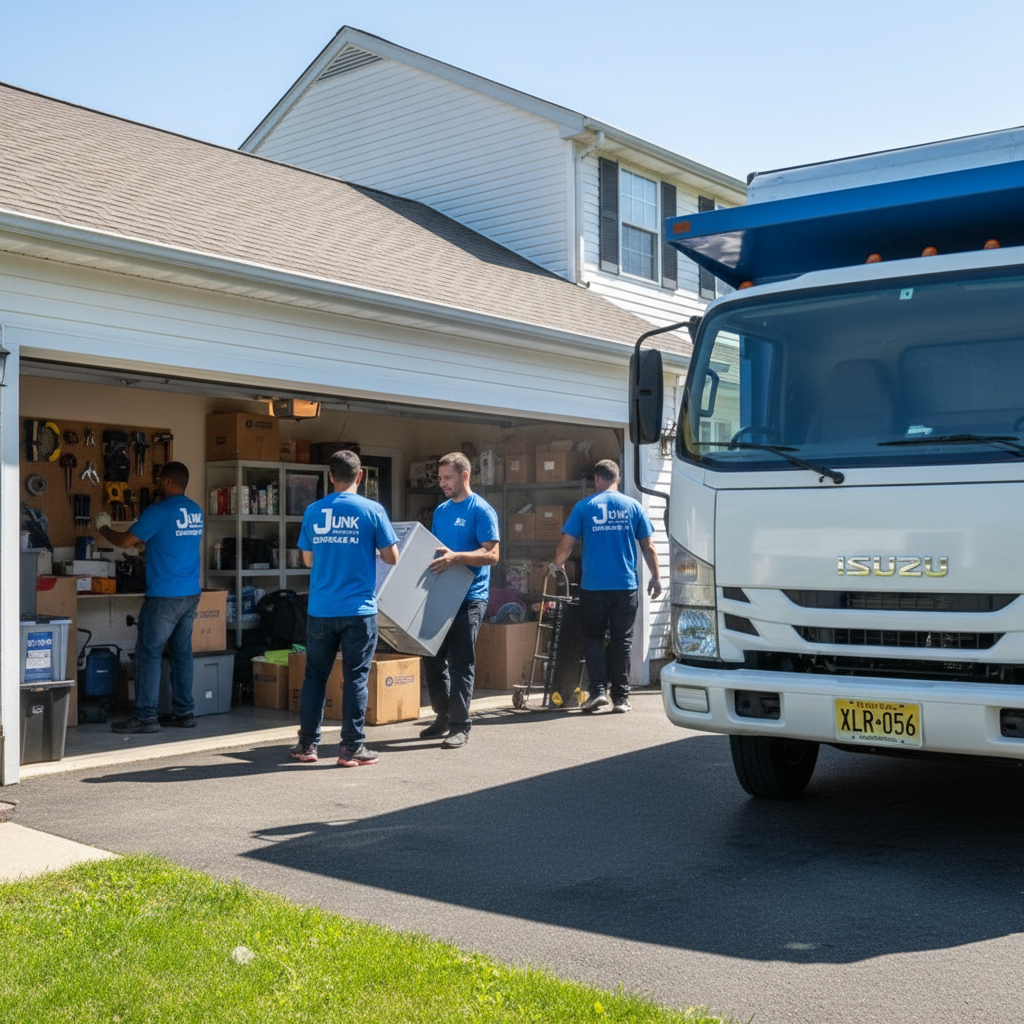
Garage Cleanout Guide: How to Declutter, Organize, and Dispose of Garage Junk Safely
For many homeowners, the garage isn’t really a garage—it’s a storage unit with a roll-up door. Boxes you meant to unpack years ago. Old paint cans. Random cords. Half-finished projects. Tools you can’t find when you need them. And just enough walking space to squeeze past the pile.
The good news: a garage cleanout can be one of the fastest, highest-impact home upgrades you can do—because it instantly improves space, safety, and daily convenience. The better news: you don’t need to do it perfectly. You just need a plan you can finish.
This is a full “skyscraper” guide—step-by-step, safety-first, and realistic—so you can get your garage back without creating a bigger mess (or accidentally tossing something dangerous).
Table of Contents
- Why Garages Get Cluttered So Fast
- Why a Garage Cleanout Matters (More Than You Think)
- Safety First: The Garage Hazards People Overlook
- Prep: What to Do Before You Start Moving Stuff
- The 5-Zone Sorting System (Keep / Donate / Recycle / Trash / Hazardous)
- How to Handle Hazardous Garage Items Correctly
- Step-by-Step Garage Cleanout Plan (That You Can Finish)
- How to Organize Your Garage After the Cleanout
- How to Keep It Clean: The Maintenance Plan
- When It’s Smarter to Hire a Garage Cleanout Service
- New Jersey Note: Common Disposal Rules That Affect Garage Cleanouts
- How JunkDoctors Helps With Garage Cleanouts in New Jersey
- Garage Cleanout FAQ
Why Garages Get Cluttered So Fast
Garages get messy for one simple reason: they’re the easiest place to postpone decisions.
- Decision fatigue: “I don’t know where this goes, so I’ll put it in the garage.”
- Project leftovers: paint, lumber, tile, hardware, tools, and “just-in-case” materials.
- Seasonal swaps: decorations, sports gear, camping gear, winter gear, summer gear.
- Life transitions: moving, downsizing, estate cleanouts, new baby items, kids outgrowing everything.
Most garages don’t get cluttered overnight—they get cluttered one “I’ll handle it later” at a time. The solution is not motivation. It’s structure.
Why a Garage Cleanout Matters (More Than You Think)
Yes, a clean garage looks great. But the real benefits go deeper:
- Safety: fewer trip hazards, better visibility, and safer storage of chemicals and fuels.
- Fire risk reduction: garages often store flammables and high-risk items like oily rags and batteries.
- Time savings: you stop rebuying tools and supplies you already own (but can’t find).
- Space recovery: you can actually park, store bikes properly, or set up a usable workspace.
- Less stress: one clean, functional space has a surprising emotional payoff.
Safety First: The Garage Hazards People Overlook
A garage cleanout isn’t just “decluttering.” Garages commonly contain items that can ignite, leak, or cause harm if handled wrong—especially when everything has been sitting untouched for years.
Garage fires are not rare
According to a U.S. Fire Administration (USFA) analysis, from 2009–2011 U.S. fire departments reported an estimated 6,600 residential building fires originating in attached garages annually, causing an estimated 30 deaths, 400 injuries, and $457 million in property damage. The leading causes included electrical malfunction, unintentional/careless actions, and open flame.
Hazard #1: Household hazardous waste (HHW)
EPA considers some leftover household products—like paints, cleaners, oils, batteries, and pesticides—to be household hazardous waste because they can catch fire, react, explode, or be toxic/corrosive, and they often require special disposal.
Hazard #2: Lithium-ion batteries (and battery-powered tools)
Lithium-ion batteries (found in power tools, cordless vacuums, e-bikes/scooters, and many gadgets) should not go in household garbage or recycling bins because they can be crushed during transport or processing and cause fires. Proper recycling and safe handling (like taping terminals) matters.
Hazard #3: Oily rags can ignite
Rags used with oil-based paints, stains, or varnishes can generate heat as they dry. If rags are left in a pile, heat can build up and potentially cause a fire. Fire safety guidance recommends laying them flat to dry, keeping them out of piles, and then storing them in a proper metal container (or handling them per local guidance).
Prep: What to Do Before You Start Moving Stuff
The biggest garage cleanout mistake is starting without staging space. If you pull everything out and create a bigger disaster, you’ll burn out and quit halfway.
What you need
- Heavy-duty trash bags + contractor bags
- Cardboard boxes or sturdy bins (for “keep” sorting)
- Permanent marker + painter’s tape (labels)
- Gloves, closed-toe shoes, and a dust mask (minimum)
- Broom + shop vac (optional but helpful)
Where you’ll stage items
- Driveway (best if weather allows)
- One cleared garage bay (if you can’t empty the whole space)
- Tarps to keep piles separate and protect items from moisture
Set a finish line: pick a day/time when donation drop-off, recycling, and pickup options are available—so sorted piles don’t sit for weeks and slide back into the garage.
The 5-Zone Sorting System (Keep / Donate / Recycle / Trash / Hazardous)
This is the simplest system that prevents “decision spiral.” Everything goes into one of five zones:
- KEEP: you use it, need it, or it’s worth storing intentionally
- DONATE/SELL: usable items you don’t need
- RECYCLE: cardboard, metals, eligible plastics, electronics (through proper programs)
- TRASH: broken, ruined, or contaminated items
- HAZARDOUS/SPECIAL: chemicals, paint, pesticides, oil, batteries, propane cylinders, etc.
How to Handle Hazardous Garage Items Correctly
Garages often contain the exact items EPA warns about under household hazardous waste: products that can ignite, react, explode, or be toxic/corrosive. EPA also notes improper HHW disposal can include pouring it down drains, on the ground, or into storm sewers—and can harm human health and the environment.
Common garage HHW
- Paints, paint thinners, stains, solvents
- Pesticides, herbicides, fertilizers
- Motor oil and automotive fluids
- Old household cleaners and pool chemicals
- Batteries (especially lithium and button/coin batteries)
- E-cigarettes / vapes (often contain lithium batteries)
What to do instead of guessing
- Read the label: it often includes storage/disposal warnings.
- Keep items in original containers: don’t pour chemicals into food jars or unlabeled bottles.
- Use HHW collection programs: many communities run permanent or periodic collection days.
- Don’t mix chemicals: incompatible products can react or ignite.
Lithium-ion batteries (quick rules)
- Do NOT place lithium-ion batteries or devices containing them in household garbage or recycling bins.
- Take them to separate recycling or HHW collection points.
- To reduce fire risk, tape terminals and/or place batteries in separate plastic bags.
Oily rags (quick rules)
- Never leave oily rags in a pile.
- Lay them flat to dry outdoors (follow local fire guidance and keep away from structures).
- After drying, store/dispose of them safely (often in a metal container, per fire safety guidance and local rules).
Step-by-Step Garage Cleanout Plan (That You Can Finish)
Step 1: Clear the “walkway first”
Don’t start with the hardest emotional pile. Start by clearing a path from the garage door to the back wall. Immediate progress builds momentum and reduces trip hazards.
Step 2: Remove obvious trash and broken items
This is the fastest win. If it’s broken, ruined, or contaminated, it’s likely trash—unless it’s hazardous (then it goes to the hazardous zone).
Step 3: Pull everything into categories (not “where it belongs” yet)
- Tools
- Sports/outdoor gear
- Holiday décor
- Automotive
- Paint/chemicals (hazard zone)
- Hardware (nails, screws, anchors)
- “Mystery boxes” (open and decide)
Categorizing first reduces decision fatigue because you can compare like-with-like.
Step 4: Make “keep” smaller on purpose
Your garage can’t hold unlimited “just in case.” Decide how much space each category gets, and let the container limit do the work: one bin for holiday lights, one shelf for paint supplies (if safe/legal), one wall for garden tools, etc.
Step 5: Get donation and recycling out fast
Don’t let donation boxes “live” in the garage. The faster they leave, the faster your garage stays clean.
Step 6: Sweep, vacuum, and reset the floor
Cleaning the floor is more than aesthetics—it helps you spot leaks, pests, and hazards. A clean floor also makes the garage feel “finished,” which reduces relapse.
How to Organize Your Garage After the Cleanout
A garage stays clean when everything has a home and the home is easy to use. Think “zones,” not perfection.
Build 4 garage zones
- Parking / movement zone: keep clear
- Work zone: tools, bench, frequently used supplies
- Seasonal zone: bins, décor, camping/sports gear
- Utility zone: trash/recycling area, pet supplies, cleaning tools
Use the “vertical rule”
Floors should be for walking and parking—not storage. Use wall hooks, pegboards, shelves, and (if safe/installed correctly) overhead racks.
Use clear bins + labels
If you can’t see it, you’ll rebuy it. Clear bins + simple labels reduce “mystery box” behavior.
Keep risky items away from ignition sources
Garages often contain heaters, water heaters, chargers, and power tools. Keep flammables and oily materials in safe storage and follow local guidance for fuels and chemicals.
How to Keep It Clean: The Maintenance Plan
A clean garage is not a one-time event. It’s a habit with a tiny weekly cost.
- 10-minute weekly reset: return stray items to their zones.
- Monthly “one box out” rule: donate or toss one box worth of unused items.
- Seasonal swap: twice a year, rotate seasonal bins and purge what you didn’t use.
- No new storage without a container: if it doesn’t fit the category bin, something leaves.
When It’s Smarter to Hire a Garage Cleanout Service
DIY is great—until it becomes unsafe, time-consuming, or impossible to finish. Hiring help can make sense when:
- there’s heavy lifting (appliances, old furniture, scrap metal)
- the volume is large (years of accumulation)
- you need it done quickly (move-out, renovation, inspection)
- there are safety concerns (mold, pests, sharp objects, chemicals)
- you simply don’t have the time or physical ability
A quality service should remove items efficiently and help direct salvageable goods toward donation/recycling where possible—so your cleanout doesn’t automatically become landfill fuel.
New Jersey Note: Common Disposal Rules That Affect Garage Cleanouts
If you’re in New Jersey, there are a few “garage cleanout gotchas” worth knowing:
Electronics don’t belong in the trash (covered devices)
Under New Jersey’s Electronics Waste Management Act, certain “covered devices” (like computers and televisions) are banned from being placed in the trash, and manufacturers are required to offer consumer take-back options (often free drop-off through approved systems).
Local drop-off rules can vary by municipality and county, so check your town or county guidelines before loading your car.
How JunkDoctors Helps With Garage Cleanouts in New Jersey
If you’re in NJ and want a done-for-you option, JunkDoctors’ Garage Cleanout service focuses on removing unwanted garage junk quickly and safely—especially when the job involves heavy lifting, dismantling, or large volumes.
JunkDoctors also states they aim to be eco-friendly by recycling materials (like cardboard and certain appliances) and salvaging items that can be donated when possible—helpful if you want your cleanout to be cleaner for the planet, too.
Call 973-336-8083 or visit JunkDoctors Garage Cleanout.
Garage Cleanout FAQ
How do I start cleaning my garage when I’m overwhelmed?
Start with a walkway. Then do “trash first.” Don’t aim for perfect sorting—aim for visible progress. One small finished area beats a whole garage pulled apart.
What should I NOT throw away from my garage?
Don’t toss hazardous items (paint, chemicals, pesticides, batteries) into regular trash. Don’t toss lithium-ion batteries or devices containing them into trash or recycling bins. Use HHW and proper recycling channels.
How long does a garage cleanout take?
It depends on size, volume, and hazards. A light declutter can be a few hours; a packed garage can take a full day or more. The fastest cleanouts have a plan for donation/recycling pickup so piles don’t linger.
Do I need a dumpster?
Not always. If you have a very large volume, renovation debris, or bulky disposal needs, a dumpster can help—but for many homeowners, a junk removal team is more efficient because they handle lifting, hauling, and disposal logistics.
What’s the biggest mistake people make?
Creating a bigger mess than they can finish. The fix is staging space + the 5-zone sorting system + a scheduled exit plan for donation/recycling/trash.
Source notes (for accuracy) USFA garage fire stats (attached garage fires, deaths/injuries/damage; leading causes): U.S. Fire Administration EPA Household Hazardous Waste definition + examples (paints, cleaners, oils, batteries, pesticides) and guidance to avoid improper disposal (drains/storm sewers/ground) and to use local HHW programs: US EPA EPA lithium‑ion battery disposal guidance (do not place in trash or recycling bins; tape terminals/bag; take to separate recycling/HHW): US EPA PHMSA guidance for households (never place lithium batteries in trash/general recycling; use proper recycling channels): PHMSA Oily rag fire risk and safe handling tips (heat buildup; avoid piles; drying and metal container guidance): Fire Line +1 NJ Electronics Waste Management Act overview (ban on disposal of covered devices in trash; take-back system/free drop-off framing; list of covered items): Long Branch JunkDoctors garage cleanout service claims (same-day garage cleanout; dismantling/bagging; recycling and donation emphasis):